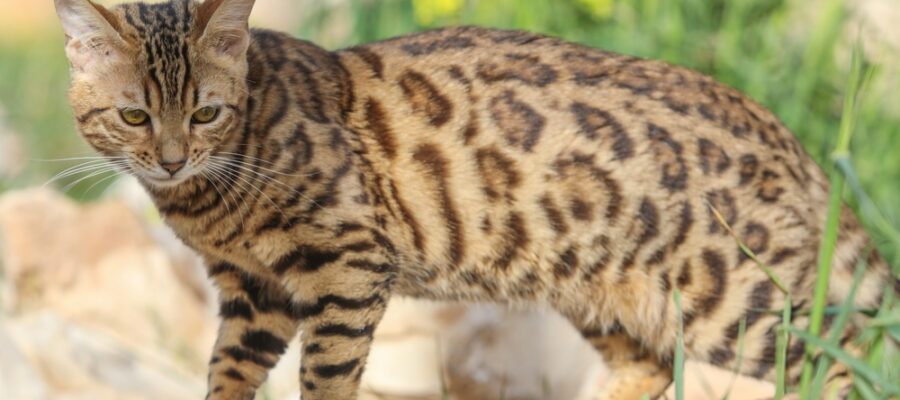
A cat that almost looks like a jaguar: discover the Bengal cat! The spots on the Bengal cat’s fur are unique, as are the long tail, fine features and large eyes. It even looks like a leopard cat! What few people know is that, apart from its physical characteristics, the Bengal cat is among the most intelligent cat breeds! You won’t be able to cheat with her on exams, but you will feel how she looks at you when you don’t know how to solve that math problem!
The Bengal cat can be divided into different types depending on its parentage, from the one closest to the wild breed to the more domestic one. Find out all about the Bengal cat in the article below!
Bengal cat: created by crossing a domestic animal with a wild one
There are some curiosities behind the origin of this cat: the Bengal breed was born in Asia from the crossing of a domestic cat with a wild leopard. That’s why it is known as the cat that looks like a leopard. It was only in the 1960s that the Bengal breed arrived in the West, initially in the United States from where it gradually spread to other countries. It all started with a woman named Jean Mill, who purchased a leopard cat, scientifically named Prionailurus bengalensis. From “too much care” and the wonderful idea of giving him a domestic cat to keep him company, the domestic cat with specific spots was born.
At the same time Jean was doing this, a scientist named Willard Centerwall was breeding a leopard cat with a domestic cat, giving birth to the cat we know as the Bengal cat. The scientist’s idea was to create a cat resistant to the FeLV (feline leukemia) virus. From these crosses, the Bengal cat breed can have species with closer ancestors to the ancestors and more distant species with more domesticated characteristics. With the different types of breeding, some kept their wild instinct more present and others adopted the typical behavior of a domestic cat. Therefore today we can classify the Bengal cat into different types.
“Cat Levels” Bengal. Depending on the degree of “kinship”, the breed has several types
Even the Bengal breed, like the Savannah cat, has phases that indicate its crossbreeding, keeping in mind that number 1 is the one most closely related to the wild leopard, and 4 is the most distant one. This Bengal cat classification is used to determine behavior and how tamable the Bengal breed can be, but it is not a rule!
Furthermore, the price varies depending on the type of Bengal cat. Before buying a Bengal cat, make sure you know which “domestic” generation it belongs to. The closer the cat is to the wild one, the higher its value.
Bengal cat F1 and F2
The Bengal cat of the F1 generation is very difficult to find. This is because the wild leopard is now considered an endangered animal. This level of the Bengal cat breed is closely related to the leopard, so it can be quite aggressive if not properly “tame”. Additionally, some owners of Level 1 Bengal cats report that they are independent and do not acquire “household habits” such as using the litter box. Males of this generation are generally sterile.
The F2 Bengal cat, on the other hand, is born from the crossing of an F1 with another F1, so its relationship with the leopard is minor. However, it is a cat that must go through the same socialization process. Females and males of the F2 generation of Bengals may be sterile. To have an F1 Bengal cat or an F2 Bengal cat, it is important to provide him with an outdoor space with trees, grass and other attractions that allow him to express his wildest behaviors. You can also have an F2 Bengal cat in your apartment, but you run the risk of not adapting to the environment you create for him. That is, F1 and F2 Bengal cats are just not for everyone.
Bengal cat F3 and F4
Bengal cats of the F3 and F4 generations are already much more docile than the first two, as they are less related to the wild leopard. The F3 Bengal cat can derive from the crossing of an F1 with an F2 or an F2 with another F2. It is always important to ask the breeder for information when purchasing this feline. The F4 Bengal cat, on the other hand, is a cross between an F3 and an F3 and is usually the most docile of all generations. At this level of Bengal, the cat is very similar to a domestic cat in behavior. The price of the F4 Bengal cat is the most acceptable, as well as being the easiest to find.
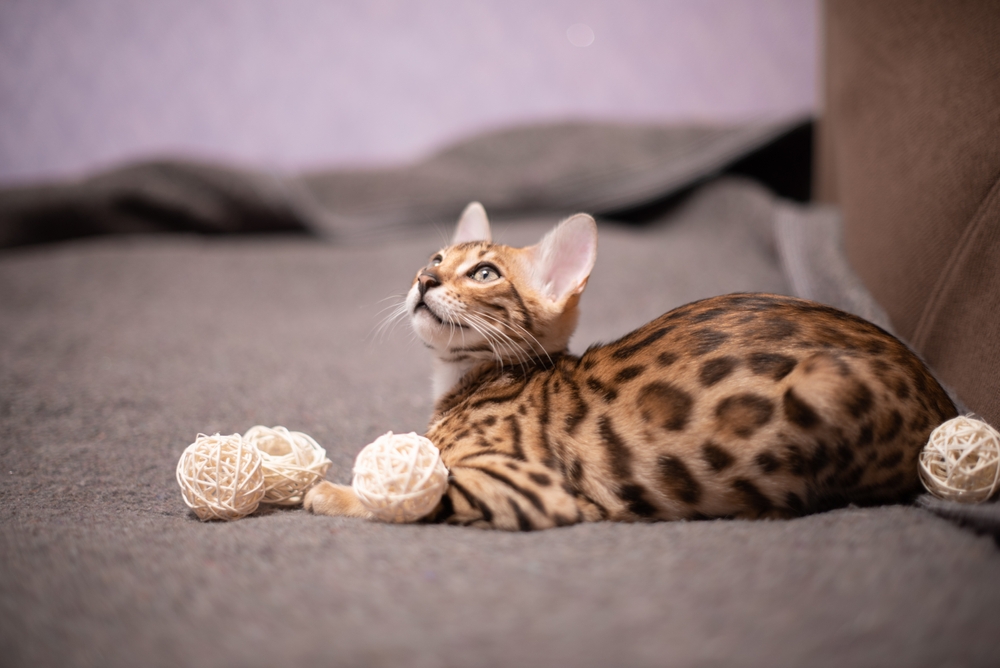
Bengal cat: the physical characteristics mark the standard of the breed
The cat that resembles a tiger has some physical characteristics that differentiate it from the savannah cat, for example. The Bengal cat is considered one of the most exotic cat breeds in existence due to its unique appearance. In the case of the Bengal cat, size matters! It is a very long cat that varies from 30 to 45 centimeters, weighs from 3 to 9 kg and lives between 12 and 14 years. In addition to its size, the Bengal cat also has a long head, but not laterally, but forward, towards the muzzle: therefore, in profile, it seems like a slimmer cat.
The eyes of the leopard cat are mostly light, in shades of blue and even greenish, but they can deviate from this color: it all depends on the crossbreeding that gave birth to that Bengal. The cat of this breed, like the Angora cat, is graceful and delicate and has long legs to facilitate walking. The Bengal cat’s fur is very short, fine and shiny, but can be rough to the touch due to its short fur. It is possible to find the Bengal cat with two colors of fur: yellow and red, which resembles the leopard itself, and also white. In both types of Bengal cat colors, to maintain the breed standard it is important that the kitten has the traditional spots on the fur, which go from head to tail.
The behavior of the Bengal breed can vary depending on the cross.
The behavior of the Bengal breed is difficult to define, because there are different levels of interbreeding: the closer it is to the wild cat, the less domesticated it is. The cat resembles a tiger, but despite this it has a good relationship with people and animals. It is a good breed for families with children. The Bengal cat gets along very well with children aged 5 to 9 years old, having the same level of energy and curiosity as them. The Bengal cat has a “canine” behavior: it follows its owners around the house, plays with balls, loves water and accepts walking on a leash, and can be easily trained with the help of a professional who knows about cats.
Although the Bengal cat is a family pet, it will not always accept your affection or hugs. He doesn’t like frequent cuddles because he is very independent, but he knows how to get close to his owners, sleep in bed together and even be present in the most diverse situations… like when his owner takes a bath.
The Bengal cat is not a cat that rejects the company of people or other animals, so even dogs can coexist well with this feline. However, smaller animals that may be easy prey should not live with the cat. Even if it is of the “latest generation” (F4), it can show the natural hunting instinct. Therefore, avoid having hamsters, fish, rabbits, guinea pigs and other rodents and reptiles around cats of this breed.
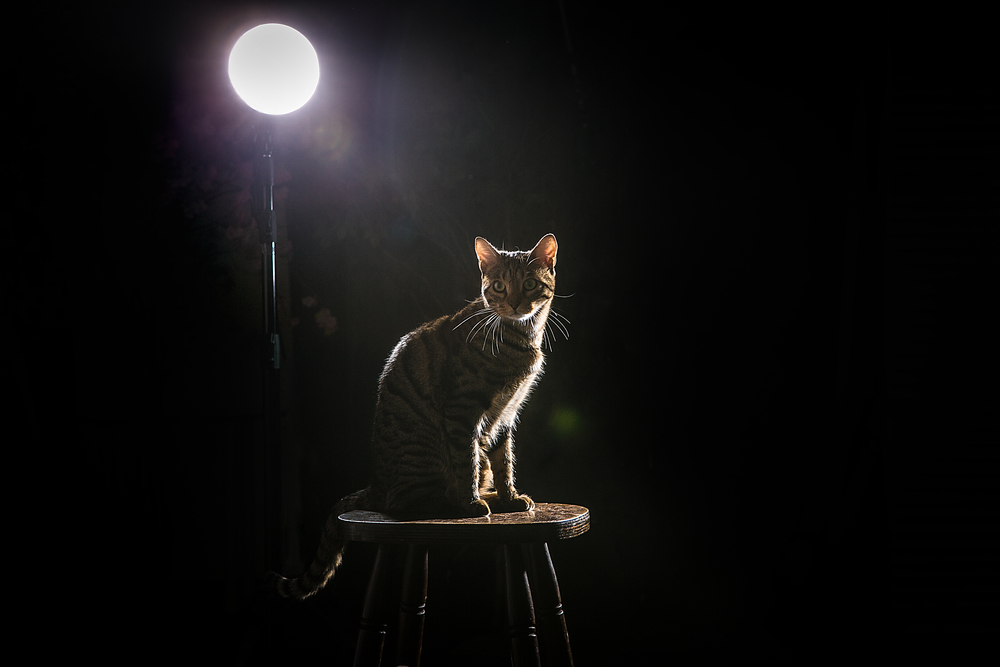
The Bengal cat is one of the most intelligent and easy to train cats
The Bengal breed is considered one of the most intelligent cat breeds in the world! The origin of the leopard cat with wild and domestic roots means that the animal possesses enormous intelligence. For this reason, the Bengal cat learns tricks very easily. Especially in the puppy phase, this feline tends to learn commands quickly. Therefore, training cats of this breed becomes very simple, because they are able to assimilate commands of the most varied types. With wild instincts very present, she is also very independent, curious and agile, qualities that make learning even easier. The Bengal cat is so intelligent that even its communication is different: it has different types of vocalizations that help it communicate with humans and other animals, through very characteristic feline meows.
The Bengal cat breed needs frequent walks outdoors
The Bengal cat has strong instincts linked to its wild nature. Therefore, they have a great desire and need to frequent outdoor places. The Bengal cat loves to run, explore the environment, exercise and climb trees and objects. She is athletic by nature and needs to develop her energy in these environments. Therefore, the owner of a Bengal cat should always provide walks in the fresh air for the cat. It requires large spaces, such as gardens, parks and more spacious courtyards. Furthermore, it is worth installing a protective screen on the windows of your home to prevent furry pets from trying to escape into the street.
Fun facts about the Bengal: the cat is full of surprises that you can’t even imagine!
The Bengal cat is named in reference to the wild cat that gave birth to it, Felis bengalensis.
In the United States, sale is prohibited in the country, since a wild cat is present in the cross that gave rise to the breed. For the same reason the Bengal cat breed is not accepted by the Association of Cat Breeders (ACF).
The Bengal breed was only officially recognized in 1985. This makes the breed one of the most recently registered breeds.
The female tends to be less sociable and more nervous than the male. This makes the Bengal cat more suspicious and less reactive towards strangers and may even adopt more aggressive behaviors.
Cat health: The Bengal breed is prone to some genetic diseases
Bengal cats are much more susceptible to genetic diseases. It usually mainly shows problems with the muscles, bones, eyes, heart and neurons. Among the most common health problems of the Bengal cat we can mention:
- hip dysplasia
- progressive retinal atrophy
- vision regeneration
- patellar dislocation
- hypertrophic cardiomyopathy
- distal neuropathy
Bengal cat care: the breed requires special attention
Bengal cat fur:
The Bengal cat’s fur does not require much work. He needs a weekly brushing to keep his fur hydrated, but doesn’t require much other care than this. In fact, it causes almost no hair loss and produces a small amount of Fel d 1, the protein that causes the greatest number of allergies in humans. Therefore, the Bengal cat is considered a hypoallergenic cat. In addition, the breed likes water, so there will not be much difficulty in bathing it.
Bengal cat teeth and claws:
The Bengal cat has its wild instincts, so in some more intense games and activities it can end up hurting someone or itself if its nails are too long. Therefore, Bengal cats need to have scratching posts and toys available to cut their nails and expend their energy. Also, since he likes water, it is quite easy to brush his teeth.
Bengal cat food:
Since the Bengal cat has a certain tendency to develop certain diseases, it is important that the diet is well balanced to ensure more resistant health and immunity. Since he is a puppy, this feline must follow a regular eating routine and needs the right amount of food. Also pay attention to the age group. Bengal cats need food specific to their age.
Bengal cat x-ray!
Size: medium
Average height: 30 to 40 cm
Weight: 3 to 9 kg
Coat: short, fine and silky
Colors: yellow and red or white, always spotted
Life expectancy: 12 to 14 years
latest posts published
Are heatwaves and heatwaves coming? Here’s how to protect your dog

8 activities your dog will love

Your dog can feel happy! Here’s how:

Dog too rebellious? Here are some causes of this behavior
Basset Hound – The nobleman with long ears and a sweet heart
9 dog breeds suitable for mountain trips

Are you going to work or on holiday? Here’s everything you need to do to leave your dog safely at home

How your pet can help you adopt a healthy lifestyle
An iconic breed, much more than a lap dog