Even though we humans only use it for a few things (like talking, chewing, whistling), dogs make the most of their true potential. You are amazed at how he uses it to fish every last grain out of the bowl, and you wake up with it on your face when the morning is longer and dearer…
But look at some things you didn’t know, or that we now tell you differently. 😄
Dogs rely more on smell than taste when deciding whether to eat something
Probably one of the smartest things they do, dogs rely heavily on their sense of smell to decide whether or not to eat something. A bit like we did when we were little with our grandmother’s spinach.
The funny thing is, dogs have about 1,700 taste “sensors” (or taste buds). They have a little more than cats, but much less than us humans. Let’s reach 10,000 taste buds!
Dogs can taste bitter, salty, sweet, and sour, but because they also feel like they can’t rely on their taste buds (someone probably told them there aren’t that many), they rely more on their ultra-developed sense of smell.
The conclusion is quite simple: if you find yourself frequently licked in the face by your dog, you probably have excellent taste.
Dogs’ tongues are usually very warm
This is also due to the fact that, in general, the normal temperature of dogs is between 38.3 and 39.2 degrees. And if he still has a fever, you need to find creative ways to take his temperature. Hehe, you know what I mean!
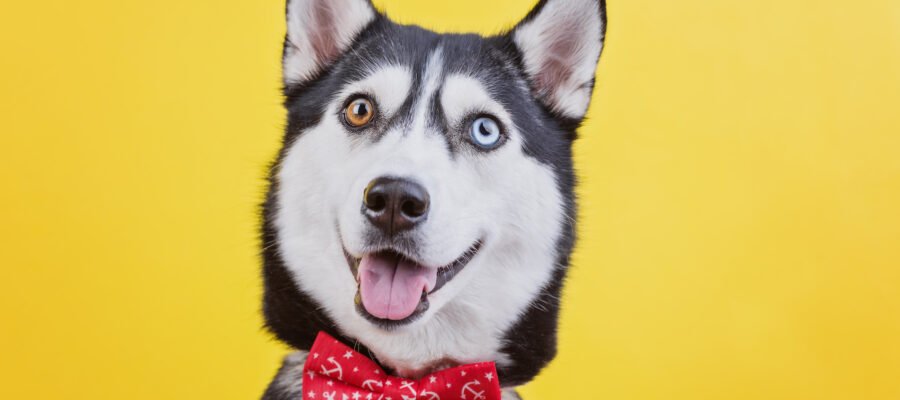
Not all dogs have pink tongues
Contrary to what cartoons taught us as children, not all dogs have pink tongues. There are two dog breeds from China, the Chow Chow and the Shar-Pei, which have black or very dark blue tongues.
If your dog’s tongue is usually pink and suddenly changes color, you may have a problem. A much darker color may indicate problems with sun exposure, toxins, electric shock, or heart or lung disease. A much lighter color may be a sign of anemia.
The calming effect of licking things
Some studies (probably conducted by British researchers) have concluded that licking produces a release of endorphins in your dog’s brain. This can make them much calmer and more relaxed after a stressful day.
But (and you really didn’t expect this) if he licks objects excessively (or even himself), he may be particularly stressed and may even need a visit to the vet to resolve some anxiety problems.
Some dogs have tongues that are too big for their mouth
There is even a very imaginative name for it: Macroglossia. It usually occurs at birth, when the puppy’s tongue is too large for the mother to properly feed.
At the same time, some dog breeds (Boxers, Pugs or English Bulldogs) have tongues much larger than their mouths allow, so they hang out all day.
A dog’s mouth is no cleaner than yours
Or mine, or anyone else’s. Now we can’t speak for everyone, but it’s just a myth that a dog’s mouth is cleaner than a human’s. The bad thing is that ours isn’t much cleaner either. Both are there. Studies say that both mouths contain around 600 species of bacteria.
Keep in mind that they are not exactly the same bacteria, so maybe the kiss can be replaced with a kiss on the cheek!
On the healing properties of saliva
Unless your dog turns out to be a true modern healer, dog saliva will not heal any wounds. Although the Greeks and Egyptians once believed that saliva had healing properties, we appreciate modern medicine and seek specialized care when we have a problem.
Well, they weren’t completely off topic either. There are certain proteins in saliva (both human and canine) that stop infections. The bad thing is that other bacteria present in dog saliva can cause dangerous infections. He is improving with the doctor.
You may be allergic to dog saliva
Even though waking up in the morning with your dog licking your face is the best thing, about 5-10% of the population cannot enjoy it. It turns out that some people are not only allergic to dog fur, but also to dog saliva.
Because dogs don’t have sharp tongues like cats
If you had to choose between the silky touch of your dog’s tongue and that quick “sandpaper” your cat gives you as a sign of affection, which would you choose?
But why don’t dogs have such hard tongues? It seems that Darwin arrives here with the answer.
Cats, regardless of their size, have always been the creatures most prone to being… “hunted”. In the normal food chain they did not occupy the highest place. Being very easy to fall into the net of enemies, cats used their rough tongue to clean their fur and pick up strong odors that could turn them into prey.
At the opposite pole, dogs, higher up the food chain, hunted in packs and were more common hunters Of bruise. They didn’t even have to dress much before going hunting, and they weren’t too worried about the smell of fur, so they kept their tongues soft.
latest posts published
Are heatwaves and heatwaves coming? Here’s how to protect your dog

8 activities your dog will love

Your dog can feel happy! Here’s how:
Dog too rebellious? Here are some causes of this behavior
Basset Hound – The nobleman with long ears and a sweet heart
9 dog breeds suitable for mountain trips

Are you going to work or on holiday? Here’s everything you need to do to leave your dog safely at home

How your pet can help you adopt a healthy lifestyle

An iconic breed, much more than a lap dog