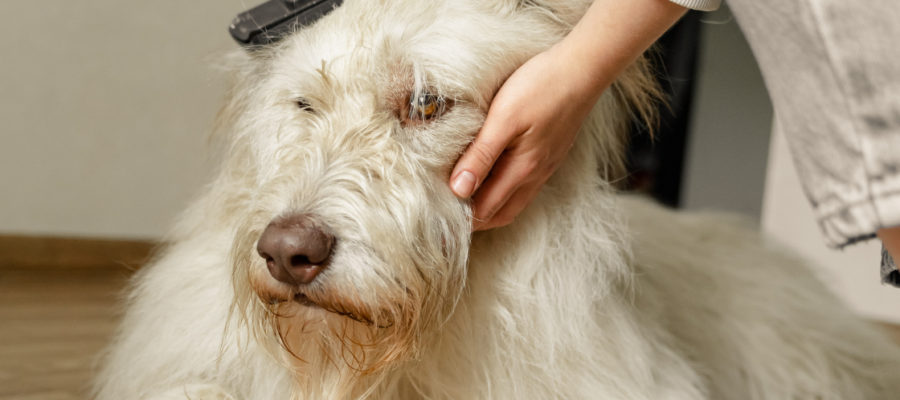

The Pekingese is a dog breed originating from ancient China, known for over 4000 years, found in paintings and sculptures of those times. The name comes from the ancient name of the capital of China, Beijing, now Peking. In ancient China, these dogs were reserved exclusively for the royal palace, they were cared for by eunuchs and their theft or sale was punishable by death. He was considered a sacred dog. In 1860, during the Opium War, the Forbidden City-Beijing was invaded by enemy troops, the emperor and his court fled, but an old aunt remained who committed suicide when she was found surrounded by 5 Pekingese dogs.
Enemy troops took the 5 dogs and handed them over to the Duchess of Wellington, the Duke and Duchess of Gordon, Richmond and Queen Victoria of Great Britain. All Pekingese specimens come from these 5 dogs. According to DNA evidence that has appeared, the Pekingese is one of the oldest and most stable dog breeds in the world, having an ancestral wolf gene.
Curiosity:
-A legend says that the Pekingese lived in the Buddha temple and had the mission to kill the little demons that existed in the temple. Except that being a dog of his size, small, he had a very big heart and could not fulfill the task.
-When the Titanic sank, only two dogs survived and one of them was a Pekingese.
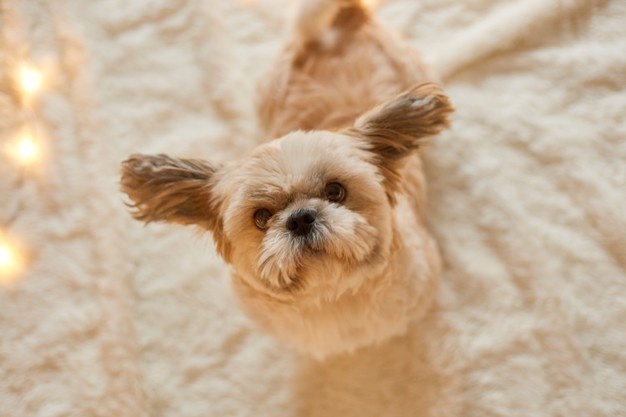
-Mickey Mouse’s pet Pluto had a girlfriend named Fifi and she was Pekingese
-Theodore Roosevelt’s daughter had one that was, of course, Pekingese.
Personality
Due to his history this dog has a greater pride than himself, but at the same time he is generally full of affection. He is an intelligent, lively, courageous, self-confident, independent, dignified, playful dog. The Pekingese prefers the company of adults, although he also tolerates children who respect his dignity: they don’t bother him, especially when he sleeps.
He is an intelligent and independent dog who can live alone in an apartment without problems. He is stubborn at different times and playful with those who are already his friends. Furthermore, he is an affectionate and loyal dog to his owner, but also mischievous towards strangers. He has no problems with other dogs or other pets.
The care and feeding of the Pekingese
This dog’s fur should be brushed and combed frequently, especially in places where it can be walked on (abdomen, paws, leg joints, ears) because clumps of fur can become painful and lead to serious skin infections. It is necessary to teach them to brush their teeth from an early age, so that they do not have problems when they grow up.
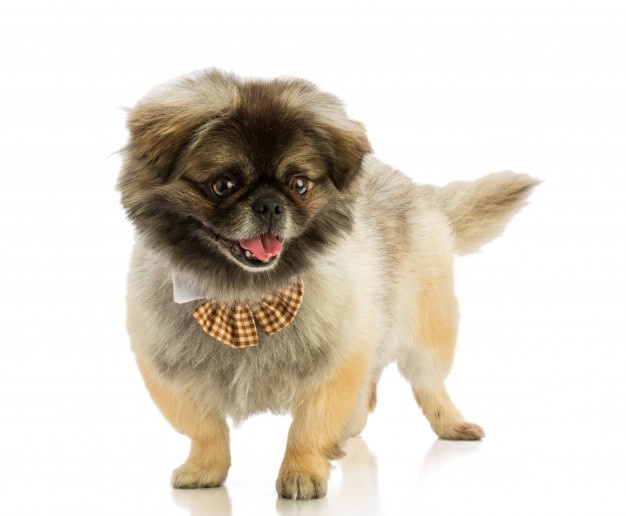
You need to take care of the facial creases so they don’t get infected, keep the ears clean and cut the excess hair between the paw pads. Nail shortening should be done once every two to three weeks around the pillows so that there is no difficulty in touching the floor. It is also important to clean the Pekingese’s anal glands and any signs of leakage or odor should be eliminated.
This dog can be clipped short, but this still requires professional grooming.
Considering that the Pekingese is a breed created exclusively to be a pet, it must live indoors and not outside. With a flattened muzzle, this dog is sensitive to high temperatures and can easily suffer thermal shock if not kept in air-conditioned homes.

A Pekingese’s food must also be of high quality. One of the complaints of Pekingese owners is that this puppy is a fussy and greedy eater, but sometimes goes on hunger strike. However, the Pekingese is an intelligent dog and knows how long to stay on strike and how long you will give in to such a demonstration. If you offer your dog skewered chicken and vegetables, he will be very happy.
If you try to prepare a dry mixture of ingredients for several weeks, the Pekingese may realize this and go on hunger strike again, but it’s worth a try. If you choose food from the store, it is best to cut it small, because having small teeth it is difficult for them to chew large pieces. And you may notice that he doesn’t like canned products.
Training
The Pekingese is a dog with a maximum weight of 14 kg, it will walk with a regal air in the park and play with toys at home. In essence, it is a dog with reduced activity. Physical exercises will be good for him, so try to give him the opportunity to exercise every day. Resist the temptation to take your Pekingese wherever you go and always get him out of trouble – let him be a real dog. For this reason he will be happier and more docile.
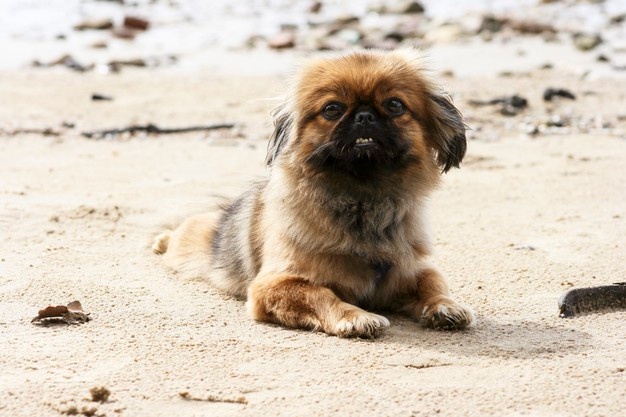
While the Pekingese’s courageous but playful nature can make it an ideal family companion in the right circumstances, it may not be the right dog breed for families with young children, as they are small in size and can easily be injured in too rough play or run towards the child if he is scared.
Despite being an intelligent dog, the independent and stubborn side prevails. He chooses who is the “boss”. However, with firm and constant training, without being harsh but rather encouraging, without punishing him when he makes mistakes (otherwise he risks withdrawing into himself), he can be taught some rules of conduct. The Pekingese likes praise more than being its own boss.
A walk in circles during training is a good way to show your royal attitude. Jumping on rings or running on tracks is far below the dignity of a Pekingese. He prefers to watch rather than participate in such physical activity. Consistency and praise are the best method for training a Pekingese. A reassuring voice and calm demeanor is what the Pekingese likes.
Health and vulnerable points
The most serious health problem is heart failure (brachycephalic respiratory syndrome) which leads to death. The Pekingese can also have eye diseases (including dry eye, glaucoma, and progressive retinal atrophy) and skin allergies. It is susceptible to back and spinal injuries, patellar luxation (situation in which the knee joint moves from its normal position).
A Pekingese is very good at providing quality companionship and loving you!
latest posts published
Are heatwaves and heatwaves coming? Here’s how to protect your dog

8 activities your dog will love
Your dog can feel happy! Here’s how:
Dog too rebellious? Here are some causes of this behavior
Basset Hound – The nobleman with long ears and a sweet heart
9 dog breeds suitable for mountain trips

Are you going to work or on holiday? Here’s everything you need to do to leave your dog safely at home

How your pet can help you adopt a healthy lifestyle
An iconic breed, much more than a lap dog