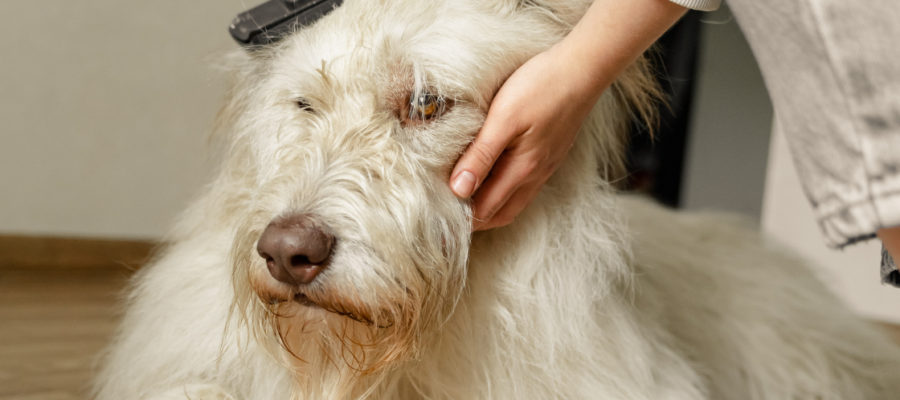

All pet owners want to know that their fur babies are happy. We take them with us on vacation, buy them toys and prizes, take them for walks, play and love them. Even though we want to spend as much time as possible with them, sometimes we have to leave them alone at home to go shopping, go to work or go out with friends. It may happen that when we return home we find less pleasant “surprises” (rotten furniture, destroyed shoes, urinating in the house, etc.).
The pandemic has been an extremely difficult time for everyone. Many people worked from home and perhaps the only ones to enjoy this change were the dogs who benefited from the presence of their owners much longer than before. But as things gradually started to return to normal, people resumed their pre-pandemic schedule. They started going to work, going out on the town or shopping. And that meant they had to leave their four-legged friends at home alone. Dogs can become anxious when they are young or as adults. A special case is older dogs who develop anxiety. Unfortunately, all mental functions, memory and perception begin to deteriorate with age and can cause confusion. Some older dogs with cognitive dysfunction syndrome may have severe anxiety problems.
Separation anxiety can affect all dog breeds and can be felt regardless of age. This manifests itself through intense emotional stress when the dog is left alone at home or in some cases waiting for the owner to leave. It is not possible to establish the exact cause of the appearance of this phenomenon, but several theories exist. One of them is that premature weaning can lead to this condition. Furthermore, excessive dependence on the owner, a somewhat unstable emotional background of the dog, aging, poor management of the owner’s departure and arrival are just other possible causes. Before separation anxiety is diagnosed, a visit to the vet and a series of tests are necessary to eliminate discomfort caused by a health problem.
Symptoms of separation anxiety can vary. The most common are the following:
- excessive barking/howling
- urinated/defecated at home,
- destructive behavior (particularly the door frame or the wall next to the door) or self-destructive behavior (excessive licking or scratching which can cause health problems or desperate attempts to escape from “detention” which can result in serious injury)
- drooling, stuttering excessively, or shaking
- refusal of food or water
Although it is a rather difficult situation to manage and requires a long-term commitment on the part of the owner, the anxiety can improve or even disappear. The first step to take is to completely change the way we go out and enter the house. When we leave the house we don’t hug the dog, we don’t greet him and we don’t show any gesture of affection, which only increases the dog’s anxiety. Likewise, upon returning home, we will only pet the dog when he is calm and ignore him if he is very agitated. We can do “simulations” of leaving and entering the house. Dress and prepare as if you were going into town or shopping. Some dogs show the first signs of stress when the owner begins to get dressed or prepare to go out alone. Dogs will immediately recognize the clothes or shoes in which you take them for a walk and those for going out in the city or shopping. It is essential to follow any routine you have when you leave him alone. Take your keys, your bag, put on the clothes you usually carry with you. Leave and enter the house several times a day, following the protocol of not being affectionate with the dog. This way you desensitize the dog to your departure and arrival. After a while you can gradually increase the interval between departure and arrival up to a few minutes and, depending on the dog’s response, to tens of minutes. You don’t have to rush, you can increase the time only after the dog no longer shows anxiety. The ultimate goal is to get the dog used to your absence and stop behaving inappropriately when you are not around. The process can take months.
Another way to improve separation anxiety is to teach your dog to stay in the crate or crate training. Although for many people the crate has a negative connotation, for dogs things are totally different. Canids are animals that live in dens by nature, so dogs will also love staying in such spaces. And a cage is similar to a den, a safe, enclosed space that belongs entirely to them. The cage will fuel the feeling of security and can calm anxiety. It is very important that the cage is suitable for the dog’s life. It must be able to stand comfortably, lie down and turn around inside it without problems. Therefore, the cage should be neither too small nor too large. The crate will be the dog’s favorite place to relax. Depending on the dog’s preferences, we can place a bed or towels, although there are many dog breeds that prefer to sit directly on the floor of the cage. If we have a puppy, the ideal would be to only use pads. To motivate a dog to accept the crate we will use positive conditioning. We will give rewards to the dog when he is interested in the cage, at first he will smell it, he will be curious, he will enter the cage only with his front paws, then with his whole body. Each time you will receive rewards for each step taken towards the inside of the box. It is very important not to rush with the introduction of the cage. The process can take up to 6 months. We can move on to the next step only when the dog feels comfortable. At first the cage door will always be open, allowing the dog to come and go as he pleases. We can dismantle it or support it with something so as not to accidentally hit it and scare the dog. Even though it may seem like a Herculean job, it requires a lot of dedication and involvement from the owner. Short training sessions, several times a day, are necessary. Once the dog has accepted the cage and feels comfortable, we can put the door back on and close it for 10 minutes and then increase the duration. Initially we will stay in the room until the dog is locked in the cage, then, after a while, we will leave the room. It is not recommended to leave your dog in a cage for a long period of time. They need to play, go out for physiological needs, food or water. It is essential to keep an eye on the clock every time we leave the dog in the crate. As a precaution, it is advisable to remove the collar or anything that could remain hanging from the cage and cause strangulation of the dog. After the dog can be left locked in the crate for 30 minutes without showing any symptoms of stress, we can think about leaving him there when we leave the house. It is essential that during the day, when we are at home, we lock the dog in the cage so as not to associate the cage with our absence. We can use the crate when we have guests, when we have something to do and the dog’s presence would make us uncomfortable or when we think we need a break. We can leave him a Kong type toy to keep him busy. Once the dog gets used to the crate and no longer has anxious behaviors, we can increase his space and leave him in an entrance, then in a room, so eventually we can leave the dog alone throughout the house. We will never use the cage as punishment.
Another way to manage separation anxiety is to dress your dog in compression jackets or shirts, also known as ThunderVests or ThunderShirts. Light, constant pressure placed on the dog’s trunk will release the calming hormone oxytocin and endorphins. If necessary, you can use a scarf or scarf.
On specialized sites you can find diffusers or collars with pheromones. Pheromones are synthetic hormones that mimic the hormones a mother produces to calm her babies. Their presence in the room or around the dog through the collar will stimulate his sense of smell and can calm his anxiety.
It is essential that the animal does physical and especially mental exercises. A bored and under-stimulated dog is more likely to have emotional problems than a tired one. He who is tired is happy. The fact that you have a busy schedule, are very busy and can’t pay too much attention to your four-legged friend can be a factor that triggers his anxiety. In addition to walking for at least 1 hour a day, the dog must necessarily be socialized with other dogs. You can take him swimming or running with him. In addition to physical activities, it is very important to stimulate the dog’s mind. We can do this with puzzle toys or through training. By learning a new command every week, we improve our relationship with our dog and strengthen it. Ideally, before being left alone in the house, the dog should be walked, run and tired. This way we avoid further problems.
Sometimes anxiety can take serious forms and require pharmacological treatment to improve the dog’s quality of life. The choice of treatment is made only on the recommendation of the veterinarian and only if he recommends this treatment to the dog.
The onset of separation anxiety cannot be prevented despite the owners’ constant efforts. Once installed, it takes a lot of work, time and involvement. Collaboration with a trainer specializing in canine behavior is essential and has been very successful. With patience, involvement and a positive attitude you can achieve good results and reduce the stress your dog feels when left alone.
latest posts published
Are heatwaves and heatwaves coming? Here’s how to protect your dog
8 activities your dog will love
Your dog can feel happy! Here’s how:

Dog too rebellious? Here are some causes of this behavior
Basset Hound – The nobleman with long ears and a sweet heart
9 dog breeds suitable for mountain trips

Are you going to work or on holiday? Here’s everything you need to do to leave your dog safely at home

How your pet can help you adopt a healthy lifestyle
An iconic breed, much more than a lap dog