

At the opposite pole there are animals, of all categories, which are exploited by man, used in experimental laboratories or simply for commercial purposes.
The pet industry has developed a lot in recent years. There have even been accelerated breeding operations in which animal rights are systematically violated, with good awareness, with the sole aim of making money.

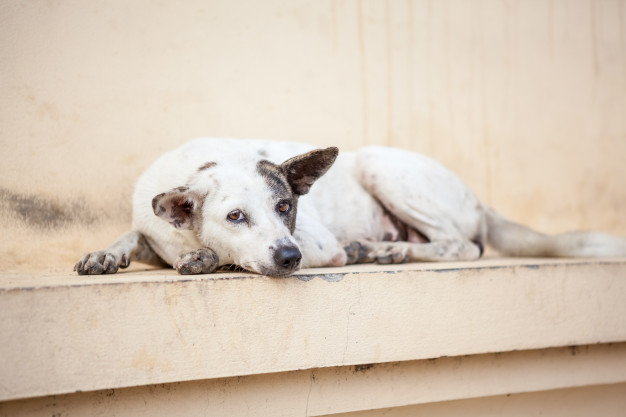
Abandoned/abandoned dog looking into camera lens
At an international level, structures have been created whose objective is the protection of animals and their rights, but there are also numerous individual initiatives in this sense. Animal lovers have founded associations and non-governmental organizations (NGOs) whose aim is to protect them. Here, abandoned, neglected or traumatized pets, dogs or cats are welcomed and offered shelter, food and medical care. At the same time, there are programs to raise awareness and educate society regarding the correct way to treat animals.
The adoption or purchase of a dog or cat must start from a fundamental principle, that is, taking responsibility for its care. Most of the time this commitment is superficial and at a certain point the animals are removed, abandoned, even physically and mentally traumatized. Cruelty to animals includes ill-intentioned acts, ignoring and neglecting their needs. They are deprived of food and water, tortured physically and emotionally.

Studies by psychologists have shown that any person exposed to abuse in childhood can develop mental and emotional imbalances in adulthood, and cruelty to animals is a form of manifestation.
Violence against animals has been linked to a greater likelihood of criminal violence and various forms of domestic abuse.
Signs of a traumatized animal:
- Information and dehydration
- Visible trauma to the body
- Lack of cleanliness and unsanitary conditions in the area where the animal lives
- Tie or lock in a cage
- Signs that the animal has been trained to fight
- Too many animals live in one house or property
Below we detail 2 of the most frequently encountered forms of violence and some suggestions regarding their management:
1.Physical violence – for example tying – the practice by which the dog is tied to a heavy object and left unattended. The animal may have some freedom of movement and in this case a lighter chain or rope is used. The term chaining refers to situations in which the dog is immobilized and in this sense heavy and thick chains are used.
People resort to these methods for different reasons: most do so out of ignorance, lack of education and respect for animals. Social norms regarding animal care recommend avoiding these practices.
What can we do if we encounter an immobilized or chained dog?
In this case it is necessary to notify the Animal Protection Service. The owner of the animal will be visited by a team whose members will evaluate the case. They can give advice to the owner and make a report (the dog’s health status and how the owner reports to it will be taken into account). Some of these situations can be eliminated through proactive attitude, involvement and support from community members. Punitive measures are necessary only in extremely serious conditions. Another method of involvement is to contact an NGO that specializes in helping animals and mediate the relationship between its representatives and the dog owner. You will be able to be helped with information, resources and services regarding the care of the animal depending on its aptitude and availability.
2. Violence from an emotional and psychological point of view – like humans, traumatized dogs and cats can develop behavioral disorders, fear and anxiety. Animals tend to run away when they are afraid and can become aggressive when forced to perform certain actions. Furthermore, they may show avoidance behavior, they may hide, they may be agitated. Trauma can have different manifestations such as body tremors, urination and/or defecation. These reactions occur when animals are verbally abused or forced to do something against their will.
How can you help an animal in these cases?
The first step is to provide a safe space. One of the most common ways to traumatize an animal is deprivation of liberty. A shelter dedicated to abandoned animals satisfies their need for safety. The animal will learn to integrate into a safe environment where there are no threats or punishments.
Ways to support abused animals and help stop the violence:

- Fight against excessive reproduction – the number of animals can be significantly reduced by sterilization. In this way it will be possible to avoid abandoning chickens that cannot be raised and fed adequately. In other words, prevention rather than cure is desirable. Sterilization guarantees benefits for the animal’s health and helps to extend its lifespan.
Taking care of an animal involves high costs and responsible reproduction management is the best way to avoid abandonment or traumatic episodes for both humans and animals.
- Show kindness and compassion towards other pets
- If you observe cruelty, abuse or neglect towards the animal, it is important to report it to the Animal Protection Service
- Educate children to show respect for animals
- Demand stricter animal protection laws
- Accommodation of an animal, subject to availability.
Any traumatized animal needs understanding, kindness and compassion. There are many associations dedicated to animal care that can offer materials, advice and concrete support in this sense. We must oppose any manifestation of aggression towards animals and act firmly when necessary.
latest posts published

Are heatwaves and heatwaves coming? Here’s how to protect your dog

8 activities your dog will love

Your dog can feel happy! Here’s how:

Dog too rebellious? Here are some causes of this behavior

Basset Hound – The nobleman with long ears and a sweet heart

9 dog breeds suitable for mountain trips

Are you going to work or on holiday? Here’s everything you need to do to leave your dog safely at home

How your pet can help you adopt a healthy lifestyle

An iconic breed, much more than a lap dog