It is believed that German shepherd or the wolfdog appeared through the domestication of the wolf due to the similarities between the two. There have been numerous matings between domesticated shepherds and wolves, their descendants were used to guard the shepherd’s possessions or to control and herd herds of animals. Their size and physical appearance vary depending on the relevant area in which they carried out their activity. In lowland areas, slim and athletic dogs were needed to cover large distances in a relatively short time, while in mountain areas their size was larger. Specialized literature mentions that the ancestors of the German Shepherd lived with people since the 7th century. The breed was only attested in the 19th century.
In 1899 the “German Shepherd Dog Association” was founded at the Karlsruhe exhibition. The initiators and promoters of this association were A. Meyer, cavalry captain, and Max von Stephanitz, elected and first president of the newly established forum. Horand von Grafrath (male) and Mari von Grafath (female) are considered the ancestors of today’s German Shepherd. Most German Shepherds come from this line.
The breeder wanted a utilitarian, loyal, strong, obedient and above all courageous dog. These distinctive characteristics have made it highly sought after by authorities such as the police and the army. It was successfully used in the 2 world wars, especially in the Second World War. It is already known that Adolf Hitler had a German shepherd named Blondi. German Shepherds were used by the Nazis both during the war and in concentration camps. For this reason the breed got a bad reputation, but over time it managed to become one of the most popular family dog breeds.
PHYSICAL APPEARANCE
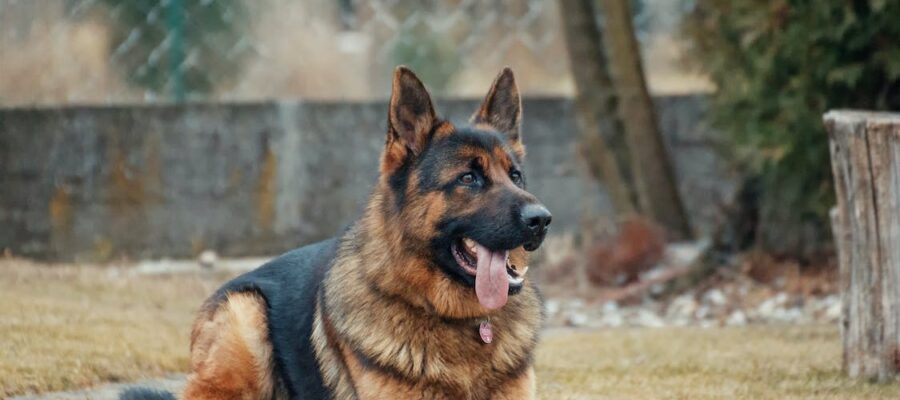
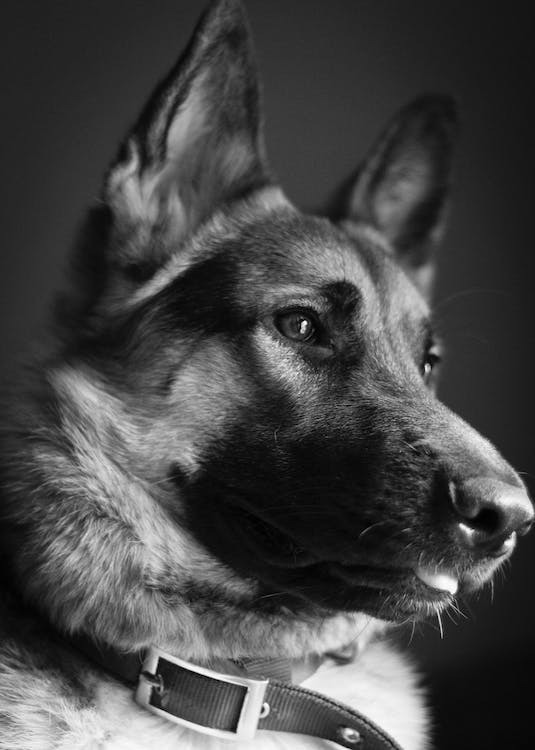
German shepherd they can be classified as medium to large dog breeds with a height of 60-65 cm, females are a little shorter with a height of 55-60 cm. He has an athletic appearance, his build is robust with strong bones. Its croup is slightly oblique, very muscular. The back is strongly lowered in purebred dogs. The head is large, well proportioned and elongated towards the trunk. The German Shepherd has a wide, slightly convex forehead, a very strong jaw with massive teeth, with a “scissors” shaped bite. His eyes are almond-shaped, slightly slanted and have a very lively and intelligent look. The ears are carried vertically, pointed and very mobile. The tail is thick and long, carried arched downwards. The color of the fur of this breed can be from long to short, varying between: black or black with a characteristic pattern, shades of brown, reddish, yellow, iron gray, gray, wolf or even white.
For a certain period the standard only allowed short-haired dogs, while long-haired dogs were only included in the FCI standard in 2008.
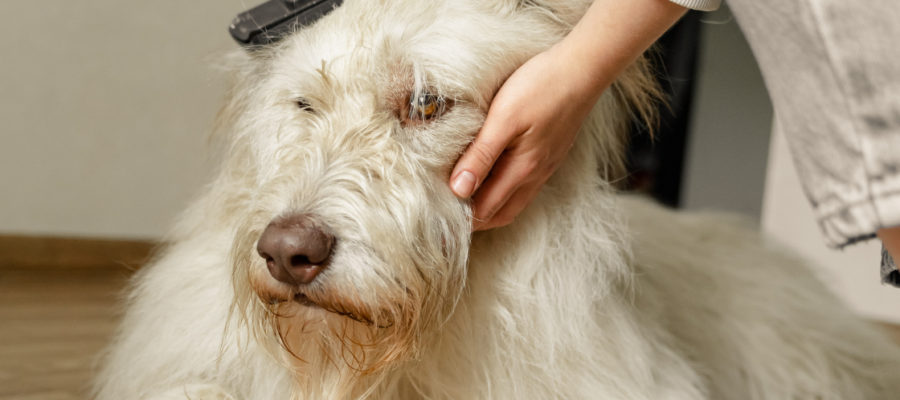
In 2011 the FCI accepted the white Ciobanescu as an independent breed under the name Berger Blanc Siosse (White Swiss Shepherd), although they occasionally appear, the FCI standard has rejected the white color since 1933. The American Shepherd Club, responsible for the American Kennel Club standard, has implemented the same rule since 1968. The only exception today is the “Canadian Kennel Club”, which still accepts the Ciobanescu dog. White German in his register. White Shepherd puppies cannot be mated with Swiss ones and therefore cannot be registered as such.
PERSONALITY
In addition to intelligence and loyalty, the German Shepherd is a balanced, agile, courageous and hard-working dog. He has a strong temperament, learns very quickly, adapts easily and wants to please his owner. That is why it is used in various ways: guard and protection within the police, army and customs authorities, therapy dog, guide dog for the blind, search and rescue dog or mountain rescue dog. Being so versatile, it can handle heavy tasks, but can be a great companion dog. The German Ciobanescu is the most famous service breed in the world, it is safe, hardy and easy to control
Even though they have a dominant appearance, the German Shepherd can be an excellent family dog. Early socialization is fundamental both with people (of different ages and especially with small ones), with other dogs and with other animals. It is recommended that training begins as early as possible and only through positive reward. The German Shepherd will perform even the most difficult tasks to please the owner. Inadequate education, lack of training, use of aggressive training, lack of intellectual stimulation, or lack of movement can lead to behavioral problems. German shepherd he is a dog extremely fond of his owner and his family, so he always needs to be with them. It is not recommended to isolate it for long periods of time. It should also be borne in mind that he is an energetic dog and requires physical activity as well as intellectual stimulation. He’s not a couch potato or lazy, he needs to “work”. He is a dog confident in his owner, calm, balanced and docile, so training him is extremely easy and pleasant.
Treatment
As with any dog, diet, regular visits to the vet and hygiene of the quadruped guarantee a harmonious and long life.
German Shepherd grooming is done by regularly brushing the fur to maintain its shine and beauty, as well as regular claw trimming and ear cleaning.
Training
German shepherd training it is essential to start as soon as possible, from the moment you set foot in your new home. German shepherd he is an excellent companion dog as long as he is socialized with people, other dogs and other animals. Specialist training (that for the multiple professions of the shepherd) is more intense and extends over a long period of time. It is crucial to use monosyllabic commands or the shortest words possible during training. Positive reward works best in this case. The dog will really want to please the owner, even if the task seems difficult. The training must be firm, the dog must understand exactly who the owner is and what he is communicating. It is not at all recommended to use harsh or brutal methods, since the dog can solve a number of behavioral problems (aggression, guarding some resources) that are difficult to solve. The best thing is to make dressage seem like a game. In this case, both the dog and the owner will be happy.
Health
Although the German Shepherd is a robust and resistant breed, like other dogs it is subject to numerous diseases. The most important and frequent are:
- Gastric torsion – is a serious condition often found in large breeds. It involves filling your stomach with air and twisting it
- Hip dysplasia is a malformation of the dog’s joint that leads to lameness, arthritis and joint pain.
- Epilepsy, which usually develops between the ages of 2 and 5, is a nervous system disorder found in several dog breeds
- Diabetes, pyoderma, pannus, panosteitis, degenerative myelopathy, hemansiosarcoma, ear infections, and development of allergies are some other conditions found in this breed.
German shepherd it has an average lifespan of 10-13 years. Don’t forget that regular visits to the vet can prevent the development of these diseases and that early diagnosis goes a long way in keeping these diseases under control
Personalities that German Shepherds have had:
Reese Witherspoon, Miley Cyrus, Kristen Stewart, Bella Thorne and Taylor Lautner, Jennifer Aniston, Enrique Iglesias, Shania Twain, Ben Affleck, Bo Derek, Michael Jackson, Tom Hanks, Dylan Rieder, Tyler Perry, Elvis Presley, Jake Gyllenhaal, Jennifer Lopez and Marc Anthony, Claudia Schiffer, Fernanda Lima, Nikki Reed and Liam Hemsworth, Meryl Davis, Geraldine Ferarro, Frank Reagan, Leann Rimes, Rob Lowe, Diane Keaton, John Stamos, James Belushi, Rachel Hunter, James Denton, Billy Ray Cyrus, Jennifer Aniston, Cameron Diaz, Jean-Claude Van Damme, Gregory Peck, Linda Blair
latest posts published
Are heatwaves and heatwaves coming? Here’s how to protect your dog
8 activities your dog will love
Your dog can feel happy! Here’s how:
Dog too rebellious? Here are some causes of this behavior
Basset Hound – The nobleman with long ears and a sweet heart
9 dog breeds suitable for mountain trips

Are you going to work or on holiday? Here’s everything you need to do to leave your dog safely at home

How your pet can help you adopt a healthy lifestyle
An iconic breed, much more than a lap dog