More than once I have heard that dermatology is the most profitable specialization in veterinary medicine. Why? You don’t get rid of skin diseases, but you don’t die either, so there will always be patients. 🙂 Sure, the devil isn’t that black, but he’s not spotless either.
Among the many dermatological diseases, today we will focus on atopic dermatitis because it is the most “ambiguous” of dermatitis, but also because we have been fighting it for 6 years. Us, me and Tara, a fox terrier puppy.
The country and its attempts
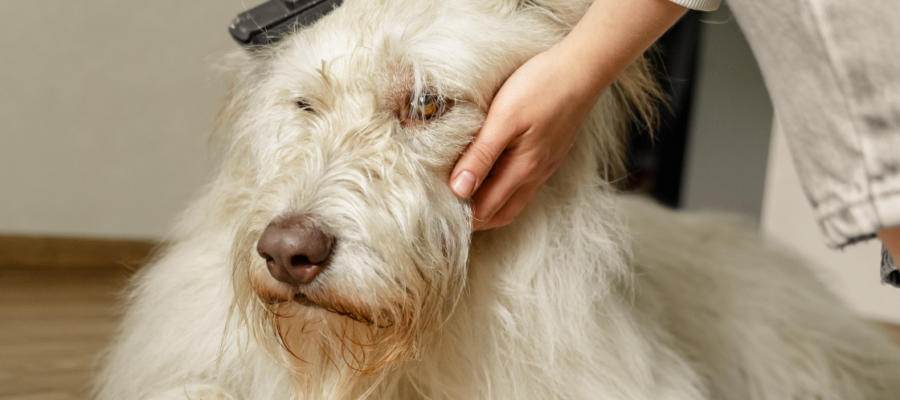
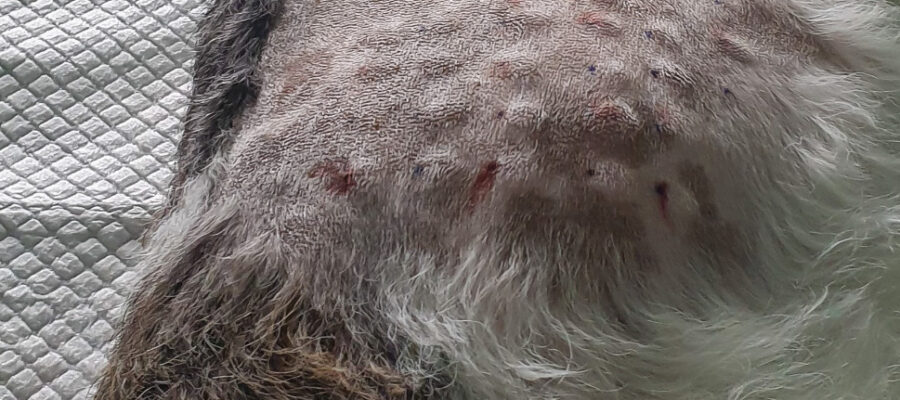
The disease began at the age of 10 months with intense itching on the face. Itching may also be present in the ear area, around the eyes, on the belly, on the paws, etc.
In the first phase I consulted all types of veterinarians based on hearsay and recommendations until I understood that there are cases in which only a specialized doctor can provide detailed explanations on the disease that our four-legged friend is facing and can also develop a plan for specific tests and analyses.
Atopic dermatitis it is a hereditary disease, not transmissible to other animals or humans, the disease characterized by the predisposition to develop allergies to certain environmental factors. Unfortunately it is not curable, but with a certain rather complex therapeutic scheme it can be kept under control, giving the four-legged friend the possibility of having a balanced life as close to normal as possible.
In order to make the diagnosis of atopic dermatitis, it is necessary to eliminate other dermatological pathologies and not just that one. Obviously you need to do a complete series of blood tests followed by a series of dermatological tests to check whether it is not a case of other pathologies such as: sarcoptic mange, Malassezia infections, pyoderma, allergic dermatitis from flea bites, mosquitoes, etc. Periodic deworming, both internal and external, should not be neglected. Once these conditions have been eliminated, it must be taken into account that it could also be a food intolerance, a high sensitivity to certain foods. For this purpose, one or two exclusion diets will be carried out with foods specifically designed for this purpose. The exclusion diet must be done for at least 2 months, this means that for 2 months the dog will only eat that food. Without the slightest exception.
Three of the exclusion diets I did with Tara were:
Purina ProPlan HA Dog
Royal Canin hypoallergenic
Atopic advancement
Let’s not despair and continue looking for the solution
Unfortunately we did not see any improvements after the exclusion diets.
If over the course of 2 months we observe the cessation or improvement of the itching, we can consider that it is a food hypersensitivity and in this case you can establish an adequate diet together with the vet.
If it turns out that the exclusion diet has not had the desired effect, don’t despair, let’s move on to the next step.
Since other dermatological pathologies have been excluded from the discussion, as well as food hypersensitivity, after making sure that deworming has been carried out correctly, we can use an intradermal test after which we will be able to find out which allergens trigger itching, inflammation, obsessive licking. These can be: tree pollen, grasses, weed pollen, fungi, allergens of the internal environment, epithelia, insects, inhalant allergens, etc.
After the test we will be able to find out what our four-legged friend is allergic to and, based on this, the vet will be able to develop a long-term desensitization treatment plan for us.
With a little luck it can be shown that allergies are only seasonal or, if we are less fortunate, that allergies can occur throughout the year.
If the final diagnosis is atopic dermatitis, we must consider eliminating the animal’s interaction with allergens as much as possible. Whether it is more rigorous hygiene of the house, avoiding carpets as much as possible, removing dust more frequently than usual, removing mold, excessive humidity from the room, avoiding textile toys, avoiding exposing the animal outdoors in areas with extensive vegetation. All this is done based on the result of the intradermal test.
Depending on the severity of the symptoms, the veterinary dermatologist will choose the appropriate treatment, whether it is a desensitization treatment, whether it is a treatment with immunomodulatory drugs, antihistamines, glucocorticoids, etc.
Conclusions: Atopic dermatitis, as I said before, cannot be cured, but it can be controlled with a treatment plan drawn up exclusively by a veterinary dermatologist.
This means:
- Pharmacological treatment. Fortunately, veterinary medicine has made a lot of progress in recent years, so treatment with immunomodulators has gained ground compared to glucocorticoid therapy, which, despite having proven effective, is known to have multiple side effects.
2. Adequate hygiene of the animal and the place where it lives:
- Chlorhexidine-based shampoo:
* I’m Dooxo Pyo (sponsored fool).
*Allermil
*Expert veterinary specialist Sampon
* Chloroxyderm Sampon 4%
- Hypoallergenic and anti-itch hydrating shampoos:
* Douxo calm range (sampon and mousse)
*EFA Physio Dermescent Shampoo
3. Supplements to help maintain/restore skin integrity:
*Atopivet, tablets or spot on, is a veterinary product that helps restore and maintain the integrity of the epidermal barrier in dogs, especially during or after diseases that weaken the integrity of the skin
*Allerderm Spot On helps restore the function of the protective barrier of the epidermis and, therefore, promotes hydration, reduces sensitivity and strengthens its protective role.
*MegaDerm – Food supplement with essential fatty acids, which helps restore the integrity of the skin and improve the quality of the hair of dogs and cats.
* Cortavance spray – for the symptomatic treatment of inflammatory and itchy dermatoses in dogs.
4. Strict diet preferably with hydrolyzed proteins.
5. Avoid, as much as possible, areas with allergens, allergens discovered after intradermal testing
6. Patience and perseverance in finding a treatment plan that guarantees a balanced life for your four-legged friend. We don’t have a link for this, but we’re keeping our fingers crossed 🙂
Success!

USE: The data in this article is strictly informative and does not replace a visit/consult to a veterinarian.
latest posts published

Are heatwaves and heatwaves coming? Here’s how to protect your dog

8 activities your dog will love

Your dog can feel happy! Here’s how:

Dog too rebellious? Here are some causes of this behavior

Basset Hound – The nobleman with long ears and a sweet heart

9 dog breeds suitable for mountain trips

Are you going to work or on holiday? Here’s everything you need to do to leave your dog safely at home

How your pet can help you adopt a healthy lifestyle

An iconic breed, much more than a lap dog