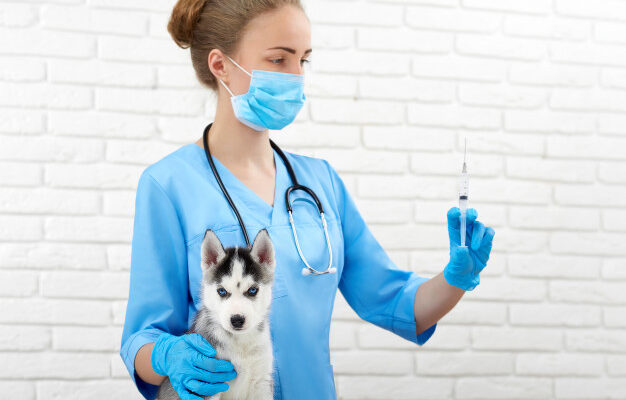
Vaccines help prevent contagious and sometimes fatal diseases. Some vaccines are mandatory, while others are only recommended.
When a dog is born, through colostrum (mother’s milk), it receives antibodies that protect it in the first weeks of life.
Vaccination against infectious diseases begins from 6 weeks of age.
Vaccination schedule for dogs
Through vaccination, dogs are exposed to a dose of pathogenic viruses or bacteria and their immune systems respond by producing antibodies that will protect them in the future. When the puppy is vaccinated, he will be given a very small dose of a virus or bacteria with a modified structure, so that these harmless particles generate the immune response after vaccination. This will stimulate the puppy’s immune system, so that it develops specific antibodies for the respective virus or bacteria. The viruses or bacteria used in vaccines are, in most cases, dead or inactivated, which means that, in general, they cannot cause the respective diseases.
The vaccination calendar will always be established only by the veterinarian, who must take into account the needs of each individual dog. Also inform your vet where you purchased the puppy or if you intend to travel abroad with the puppy and inform him of any activities he participates in, such as dog shows or sporting events.
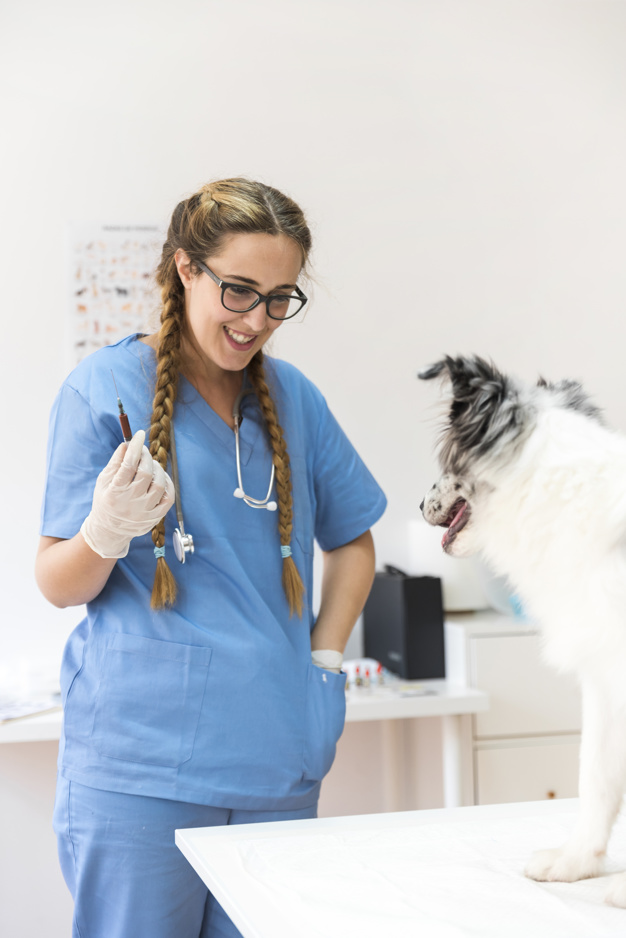
In general, it is recommended to administer the first vaccine (polyvalent or monovalent) when the chicken is 6 weeks of age, when the antibodies obtained until then from the mother’s milk no longer perform their function. The dog must be dewormed internally 2 weeks before for the vaccine to take effect. The vaccine will be repeated at the age of 8 weeks: bivalent, 10 weeks trivalent and 12 weeks polyvalent and anti-rabies. In some cases, in the opinion of the veterinarian, the immunization program will continue until the age of 4 months-16 weeks. During all this time, and after approximately 10-14 days from the last vaccination, it is recommended not to let the dog come into contact with the external environment, not walking outdoors and above all contact with other dogs because there is a risk of disease.
A usual vaccination schedule consists of the following sequences:
– at 7-9 weeks: distemper, infectious hepatitis, parvovirus – however vaccination can start earlier if the puppy is in a high risk environment.
– at 11-13 weeks booster of the 3 previous vaccines plus rabies and leptospirosis
– at the 15-17th week boosters for rabies and leptospirosis
– at 15 months reminders for all the vaccines indicated above.
Mandatory vaccines are those that prevent:
–Jigodia– this disease can have different forms, which makes diagnosis difficult. It generally manifests itself with fever, respiratory problems – rhinitis or bronchial pneumonia, digestive problems – gastroenteritis, eye, skin or nervous problems, which can often be fatal.
–Canine hepatitis– Symptoms can range from mild fever and mucus congestion to vomiting, jaundice, stomach distension, depression, decreased white blood cell count, liver pain, and severe hepatitis.
–Canine parvovirus– it is extremely contagious and attacks the gastrointestinal system, causing loss of appetite, vomiting, fever and often severe bloody diarrhea. Extreme dehydration can occur quickly and can be fatal within 48 to 72 hours.
– Leptospirosis – it is a zoonotic disease, caused by bacteria transmitted through the urine of rodents, which can affect humans and some animals. In dogs, symptoms include fever, vomiting, abdominal pain, diarrhea, loss of appetite, severe weakness and lethargy, stiffness, jaundice, muscle pain, infertility, and kidney failure, with or without liver failure.
The recommended vaccines are those that prevent:
-Anger- a fatal disease for dogs and humans, usually characterized by unsteady gait, sore throat, excessive salivation and, in some cases, convulsions of the facial muscles. Often, unusually aggressive behavior or biting is observed followed by a refusal to loosen the jaws.
–kennel cough– it is a disease that dogs contract through contact with other dogs, for example in dog kennels or during dog shows. The disease can cause a strong cough, which can be more or less serious, depending on the age and general state of health of the dog.
Sick, underweight or pregnant dogs are not vaccinated. After completing the initial vaccination program, for the dog’s health, it is necessary to administer a multipurpose and anti-rabies vaccine annually. More precisely, this annual vaccine must contain the following boosters: distemper, infectious hepatitis and parvovirus.

Amstaff, Rottweiler and Golden Retriever breeds are more susceptible to canine parvovirus. In Romania the most widespread diseases among four-legged dogs are distemper and parvovirus. This is why vaccines represent a great advantage in preventing your dog from getting sick and prolonging his life.
The risks of vaccination in dogs:
– after the dog has received the injections, it must be borne in mind that it is important to ensure the puppy rests, because its immune system will be more demanding than normal.
– the vaccine may not be 100% effective. Some dogs, even if vaccinated, can be affected by the disease for which they have been immunized.
– the effectiveness of vaccines depends on the vaccination schedule, the dog’s medical history and the vaccine manufacturer
– dogs can develop allergic reactions or neurological diseases – inflammation of the brain
– you may experience discomfort at the injection site or tissue inflammation accompanied by a painful sensation
-low fever
– lack of appetite and energy
-diarrhea
-respiratory problems
In Romania, the legislation in force provides for mandatory rabies vaccination, which must be administered to all dogs from the age of 3 months, and obviously repeated annually. In order to carry out this vaccine it is mandatory to microchip the puppy and register it in the RECS (Registry of trials of dogs with owners). Furthermore, in order to leave the country with your dog, it is necessary for the latter to have a valid anti-rabies vaccine obtained at least 3 weeks before leaving the country.
latest posts published
Are heatwaves and heatwaves coming? Here’s how to protect your dog

8 activities your dog will love
Your dog can feel happy! Here’s how:

Dog too rebellious? Here are some causes of this behavior
Basset Hound – The nobleman with long ears and a sweet heart
9 dog breeds suitable for mountain trips

Are you going to work or on holiday? Here’s everything you need to do to leave your dog safely at home

How your pet can help you adopt a healthy lifestyle
An iconic breed, much more than a lap dog